

How California Tribes Are Teaching the World to Burn Good
By Arriela Barrera
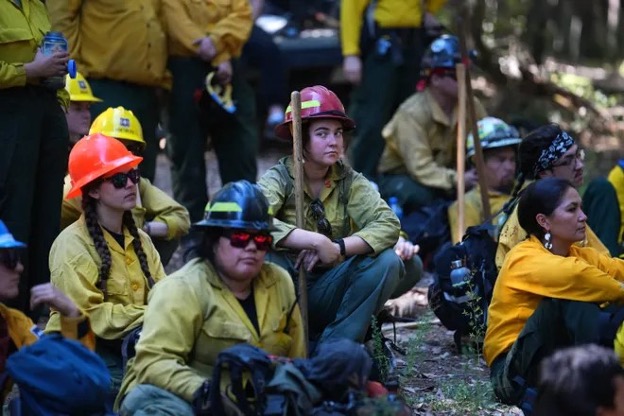
In 2022, 50 women from Indigenous communities across the United States, Canada, and Australia gathered in Karuk country for an all-female training camp to learn how to bring fire back to the land. Using Indigenous knowledge and practices, this incredible group of women demonstrated how to revive traditional practices for their tribe and for the environment.
It was more than preventing wildfires; it ensured hazel grew healthily for basket weaving and nurtured plants for food and medicine.
This is only one example of Indigenous practices being shared globally from the state of California. California tribes, such as the Karuk Tribe, are reviving cultural burnings, educating the public, and connecting with other Indigenous communities worldwide. These practices were once illegal. In 1850, the California state legislature criminalized Indigenous fire practices through the Act for the Government and Protection of Indians. The law allowed white settlers to “apprentice” or indenture Native American adults and children. This act did more than restrict cultural burnings, as it forced Indigenous communities into servitude and prohibited them from burning the land they tended.
Banning cultural burns led to an over-accumulation of forest fuels that contributed to severe modern wildfires. California has only begun recently lifting these historical bans and restoring tribal burning rights. Including legislative updates like SB 310, as the Karuk Tribe signed the first cultural burning agreement under California’s new law in early spring of 2025.
The stakes of restoring cultural burning are personal for the Karuk Tribe. In the Slater fire in 2020, they lost 150 homes, including their elder housing complex, and two people lost their lives.
Cultural burning is more than fire safety. For the Karuk Tribe, it nurtures basketry plants such as river willow, hazel shoots, ceanothus, jet-black maidenhair fern, sun-bleached beargrass, and woodwardia fern. These plants benefit from fire, since it kills pests and helps its growth to be straight and tender shoots. If left too long without fire, the plants will become crooked, brittle, and unstable. The difference between prescribed burning is largely about fuel reduction while cultural burning cultivates resources.
Alongside the burns themselves, tribes are working to educate others. Free, tribally authored courses and resources are available to the public. One example is a high school unit by Maggie Peters, a member of the Yurok and Karuk Tribes, and an educator at the Humboldt County Office of Education. She teaches grades 6-12 with curricula designed to honor the First Peoples of California, build understandings of our shared environments and histories, and affirm native identities and counter misinterpretation. Another is
“The Women Are Carrying Fire,” or Pa’asik’tavaansas Kuniktáamvunatih, a Karuk unit in the UC Davis California Model Curricula for Native American Studies. It includes the Karuk language, educates high schoolers to understand the history of fire use for Karuk women and how fire is essential for cultural sustainability. Meanwhile, PBS LearningMedia offers an online curriculum that shows how Traditional Ecological Knowledge can inform modern land management.
These are many examples of how, through UC Davis California Model Curricula for Native American Studies and PBS LearningMedia, communities in California and around the world can learn how to bring fire back to the land. Modern technology has also expanded this outreach and education. USC researchers are using AI to collaborate with firefighters to plan controlled burns, and in the classroom, a Karuk cultural fire story map can teach children and young adults. These free curricula teach how to prevent wildfires with Indigenous knowledge and offer a chance to learn about the plants and herbs essential to many of our tribes.

This work is happening close to home, too. Rhiana Jones of the Washoe Tribe of Nevada and California, who was the environmental director at the Washoe Environmental Protection Department from 2024-2025, questioned their burn program after noticing little progress. Then, she learned through the Indigenous Peoples Burning Network that it took another tribe 20 years to burn freely without the Forest Service heavily monitoring.
However, since then, the Washoe Tribe has revived cultural burning to restore forests and heritage in El Dorado County. Since then, we are seeing tribes in California working closely with the Bureau of Indian Affairs and Forest Service to practice cultural burning for the benefit of medicine, food, weaving materials, healthy soil, and a healthy habitat.
That brings us back to the women on Karuk country. After they attended the Karuk Women’s Fire Training Exchange, they returned home with the knowledge they had and educated others on bringing fire back to their land. Education and outreach are the most essential things we can do when it comes to reviving Indigenous practices around the world. Cultural burning is crucial to our way of living, and in its absence, our environments have been facing the consequences. Our land and our people have been fighting for our practices for a century, for practices that are our right. The women are carrying fire. They carry it to their tribes, into classrooms, and onto the land that has waited more than a century for it. As long as they keep carrying it, our practices will keep growing.
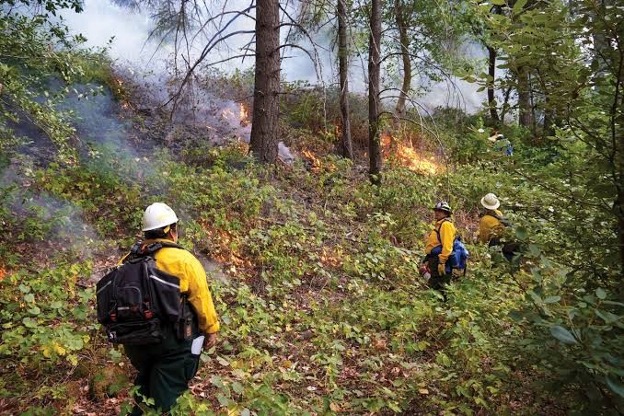
program, doing a controlled burn on Karuk ancestral territory. (Joe Rondone from The Republic)