
Meet Arriela Barrera
When I was eleven, my school took a field trip to Sly Park for a few days. My mom, Christa Barrera, came along, as she always did for her firstborn. The days were filled with camp activities, hikes, and games, and when I look back, I mostly remember the fun I had as a kid. But one moment is still engraved in my mind.
One afternoon, my classmates and I sat in an auditorium in cold plastic chairs that made our backs ache. Our guide described the land’s history and its peoples, acknowledging the Northern Sierra Miwok. The walls were lined with photographs and glass cases of artifacts, baskets, and regalia among them. At eleven, I couldn’t explain the feeling in my chest as I wondered why my ancestors’ belongings were locked up and put on display. I noticed the tension in my mom’s shoulders. A hollow feeling began to grow.
That achingly cold seat made me feel small, until our guide asked if anyone in the room was a “California Indian,” and my mom stood.
I stared up at her, the hole in my chest growing larger, filled with something I couldn’t name. Mom looked down at me expectantly, but I couldn’t move. Why were we being asked to stand? Why did they want to know?
“Stand up, honey,” she said, sensing my fear right away.
All of my classmates turned their heads. I felt their eyes on me as I peeled myself off that metal chair and stood before them, a reminder. I felt sick watching them look from the displays to my mom and me. That day, I promised myself I would never stand out like that again. I felt like I was the one in the glass case.
Hello, my name is Arriela Barrera. To my family and friends, I’m a writer, an eldest daughter, a student, and above all, a dreamer. I am a member of the El Dorado Rancheria of Miwok Indians, and as a young Indigenous woman, I have always searched for community and belonging. I love to tell others that storytelling is written in my veins, and I write what needs to be written: poetry, young adult fiction, short stories, and nonfiction about identity, land, and culture.
For years, I carried those glass displays with me through school. Fitting in wasn’t hard if I forgot who I was, and then my classmates wouldn’t stare at me like a relic, something from the past. But the hollow feeling only grew larger.
What slowly filled it were the Big Times, most of them at the Shingle Springs Band of Miwok Indians, where I watched my family members dance. Hearing the drum beat and feeling my feet in the dirt made the hollowness fill. Here, nothing was caged or on display. Instead, we are existing, and thriving.
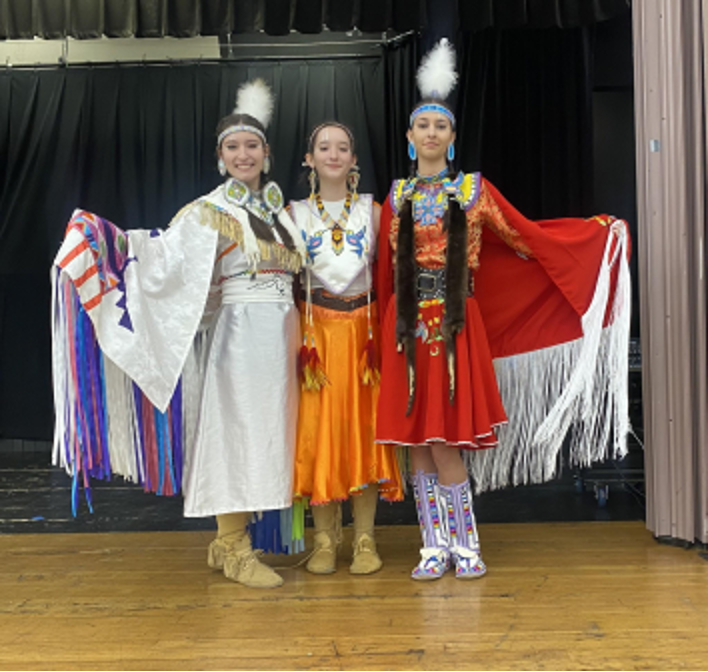
In high school, I took a risk. At Folsom High School’s International Night in 2023, I stood with my sister, Bella, and cousin Tehya, in our regalia in front of my entire school. It was the first time I chose to be seen, and it felt nothing like standing in that auditorium all those years ago. Instead, I was standing proudly, alongside my closest family, showing everyone our resistance.
By my senior year of high school, I was wearily sending in college applications and scholarships with little hope of going to a big school. I wanted to stay local, close to my family. A couple of months later, a representative called me, with my mom on the line, to tell me I had received the Federated Indians of Graton Rancheria UC Scholarship. I was driving home from an errand, and my car jerked as my body flinched. I thanked them over and over again as I slowly drove the rest of the way. Once I parked in my driveway, my phone still clenched in my fist, I swore to myself that I would take the risk, go to a UC, and achieve what many in my family never had the chance to. I did exactly that.
At the University of California, Riverside, I studied Creative Writing with a minor in Education. As a writer, I still struggle to put those years into words, but they changed my life. A few months into my first year, I gathered the courage to walk into the Native American Student Programs office. It took me a while to muster the confidence. I worried they would take one look at my pale skin and see right through me to how little I knew of our culture. The image of a glass case came back to me.
I had rehearsed a script for asking how I could get involved and come to their weekly meetings, but it vanished the moment I came face to face with a student staff member. I think I managed to ask when the meetings were. The student kindly shared all the information and told me to come on Friday. The months away from home had felt desolate, but inside that office, surrounded by warm smiles and welcoming voices, I felt the hollowness slipping away.
Months later, I became President of the Native American Honor Society. I was mentored by, and made friends with, everyone in that office. Thank you to Nogwa Smith and Jordyn Ramirez for bringing me into a community that will stay with me for the rest of my life.
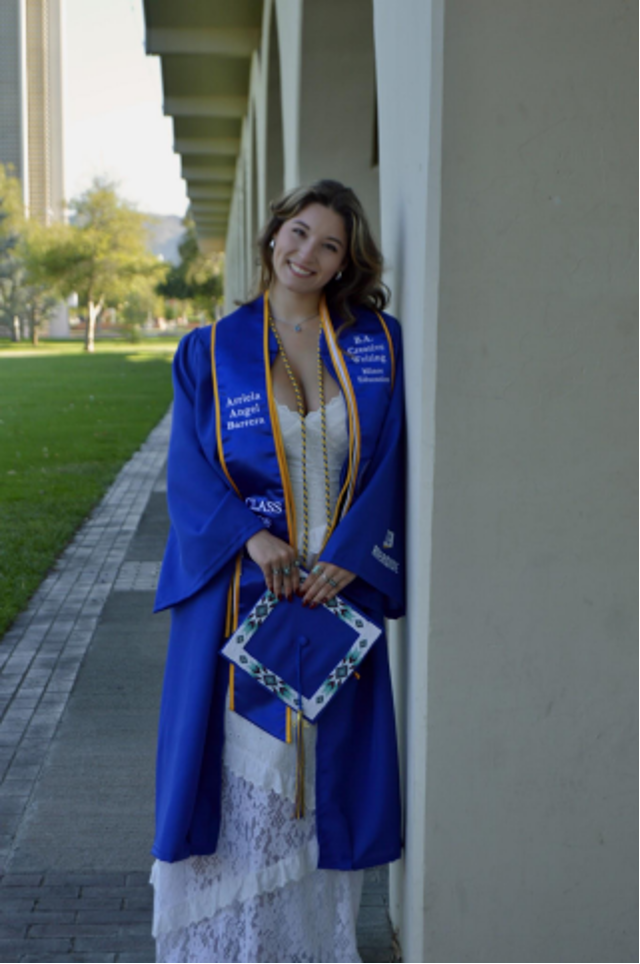
My three years in Riverside made me feel whole. I tried new things and took risks. I served as Poetry Editor of Mosaic Art and Literary Journal, where my poem “The Flooding of 20 Years” appeared in Issue 64, “Archive.” I interned as an NCAA college baseball writer with EnforceTheSport. This past June, I graduated with a Bachelor of Arts in Creative Writing and a minor in Education, and I now work as a creative writing facilitator at 916 Ink, helping students tell their own stories.
It was at the Shingle Springs Band of Miwok Indians, the same place where so many of my Big Times took place, that I learned about the Graton Heyday Berkeley Roundhouse Writing Internship. This fall, I was selected as the 2026 intern.
A scholarship and a student center are the reasons I’m here, so I’m especially hoping to write about Native students in higher education and the scholarships, programs, and people that help them get there. I also want to meet communities across California and share what they are doing. As a young Indigenous woman, I will stand tall for my culture, community, and tribe. I wish to teach others how to fill their own hollowness, the way community filled mine, and to show through words that we are existing, and thriving.
I’m grateful to Terria Smith and the Heyday team for opening this door and trusting me with these pages. A huge thank you to the Federated Indians of Graton Rancheria for funding both the scholarship that took me to UC Riverside and this internship. Thank you to the Native community at UCR, who made me feel at home in a new chapter of my life. And Mom, Dad, and all my loved ones: I made it!
I’m excited to learn alongside the Heyday team and to meet the communities whose stories fill this magazine. I invite you to reach out to me at arriela@heydaybooks.com.