

Film Review: Knowledge Keepers
Review by Tori McConnell
“[Native American science] isn’t tested through the scientific method. It’s tested through generations”, says Ryan Spring, Cultural Research Associate for the Choctaw Nation of Oklahoma. Spring is an Indigenous professional featured in an upcoming collaboration between Vision Maker Media and PBS Nova. This film titled, “Knowledge Keepers”, visits four distinct Indigenous groups across North America to show how thousands of years worth of traditional knowledge are being used by Indigenous peoples in the modern era.
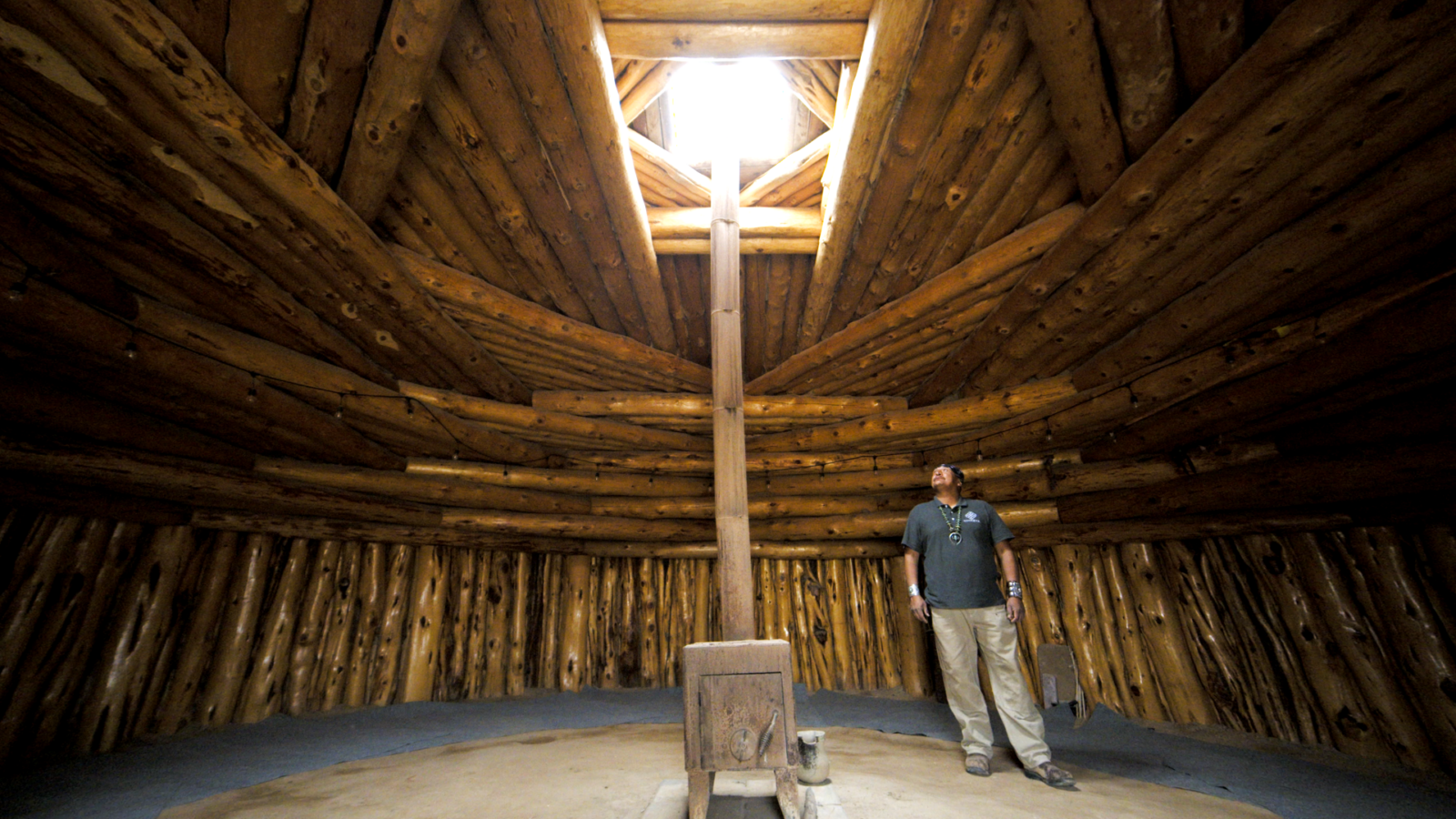
“Knowledge Keepers” – produced by Daniel Golding (Quechan) – transports you to the harsh but beautiful snowfields of the Arctic, where Yellowknives Dene First Nation elder and Chief Fred Sangris teaches exactly how Northern Dene navigate without GPS or compass. Near the North Pole, Earth’s magnetic field renders GPS and compasses useless. Therefore, wisdom passed down by generations of Dene elders is essential to surviving the extreme environment of the far North. Traversing down the continent toward the temperate shorelines of the Pacific Northwest, we find ancient aquaculture lining the shores of ancestral Coast Salish territory. Here, Nicole Norris (Halalt First Nation) and Octavio Cruz (Pauquachin First Nation) share the benefits of revitalizing and maintaining Indigenous-made marine micro-ecosystems. Moving east and further south we meet Navajo Nation citizens Roberto Nutlouis and Dawnlei Hunter Ben. The desert heat of the Diné Bikeyah, Navajo land, is one of the best places to learn about modern usage of climate-efficient traditional housing. The farther east you go, the landscape morphs from desert to temperate grasslands and forests, and we come across the Choctaw Nation of Oklahoma. Choctaw citizens Ryan Spring (Cultural Research Associate for the tribe) and Evaline Steele (tribal elder and traditional basketweaver) demonstrate the profound relationship between traditional ecological management and cultural legacy.
It is difficult to portray the depth and complexity of Indigenous science through media. After all, how could anyone possibly condense the weight of thousands of years into a film that’s less than an hour long? “Knowledge Keepers” makes its best effort to do justice to Native American science by using direct footage grounded in lands and communities as much as possible. Inserted throughout are interviews and quality animations that help describe and illustrate the topics being covered. Although, I feel that the narrative structure of the film could do well with a little more consistency and flow. Certain parts of the film feel more real and involved, while others feel slightly distant and less engaging. I guess that comes with the territory of taking on such a deep topic – but my opinion might also very easily be a biased one. Perhaps the filmmakers are also balancing the responsibility of protecting certain areas of traditional knowledge that the communities were not comfortable with sharing on film.
In conclusion, I think that “Knowledge Keepers” is a great piece to show for educational purposes of all audiences, as well as for personal viewers who are interested in Native film. Even though Indigenous science is complex, deep, and diverse, the film explicitly outlines some of the most important foundational characteristics underlying Indigenous science in general. There were also several moments in the documentary that took me back to my own experiences on the land and learning traditional knowledge from those who are close to me. It’s rare and almost impossible to replicate that feeling of learning from an elder, so I was impressed that the documentary managed to elicit that feeling for me several times. Those feelings made me think about how lucky we are as viewers that individuals from several different tribes were willing to share their knowledge with us. Because of their generosity, I am sure that they will educate and inspire many viewers of this film, “Knowledge Keepers”.