“Native Students Count!”: An update on AB 1581: data reporting on American Indian and Alaska Native pupils
By Tori McConnell
In a recent hearing at the California Senate Standing Committee on Education, Chad Mays of the Soboba Band of Luiseño Indians testified that in data collected on student demographics there is a 70% undercounting of American Indian/Alaska Native (AI/AN) students nationwide. Assembly Bill 1581 is seeking to change that in California.
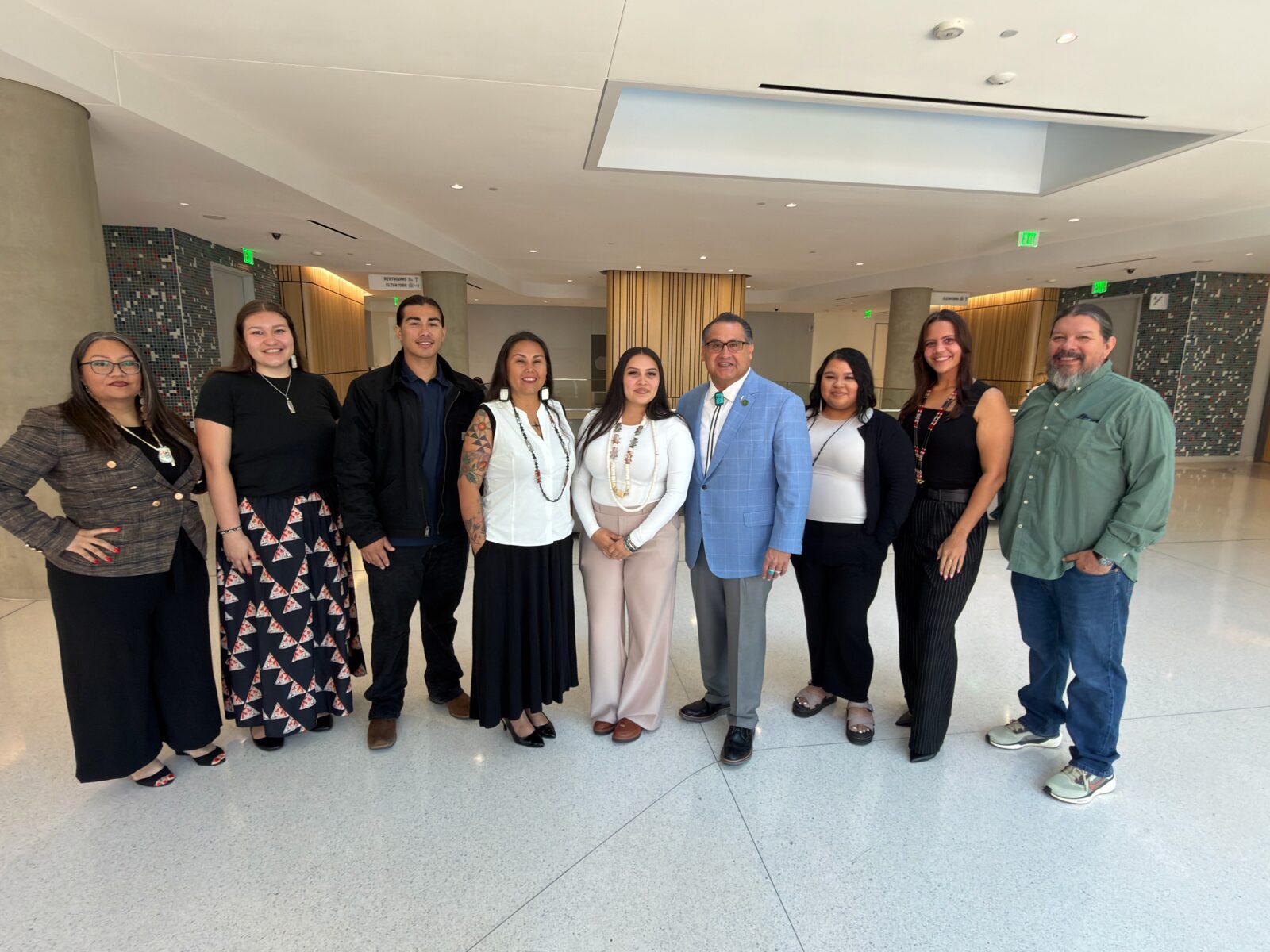
The Senate hearing for AB 1581, sponsored by the Soboba Band of Luiseño Indians, was held in Sacramento just a few weeks ago on July 10, 2026 where Assembly Member James Ramos (Yaaviatam of San Manuel Nation) introduced the bill. As Assembly Member Ramos said in his introduction, California has the highest population of American Indians/Alaska Natives out of all states in the U.S., yet meaningful and accurate data about the population of AI/AN is severely lacking. The main reason for this problem is a hierarchical system of race categorization.
For those of us living in Native California, we know that mixed-race and Hispanic Natives make up a huge swath of our Indigenous communities. But the current standard of demographic data collection in California follows the federal standard which effectively erases Natives who also identify as Hispanic or multiracial. For example, if a Native student marks both Hispanic and American Indian/Alaska Native, they will only be counted and reported as Hispanic in student race data sets. If a Native student marks that they are multiracial, they will not be counted in the Native category and will only be counted as part of the “multiracial” or “mixed-race” category. Only students who exclusively mark “American Indian/Alaska Native” on surveys are counted as part of the Native student population. Even then, there is rarely a space for them to clarify what tribe they are from or if they are enrolled. This is known as hierarchical data organization, and it’s exactly how Native Americans are undercounted and misrepresented in student data.
As one of the Senate members asked during the hearing, why is racial and ethnic identity important? Shouldn’t all students receive the same level of education services and support regardless of race? It’s a valid question from an outsider perspective, although a worn-out one for Native communities who have lived through the reality that Native American students in general face a disproportionate load of educational challenges when compared to other racial and ethnic groups – just a couple examples being historical trauma and lack of culturally appropriate educational services. Statistics show that the Native American students who are counted have significantly lower rates of graduation and educational success compared to their peers.
Additionally and equally as important, being Native American is not just a racial or ethnic identity. It is also a political one, with students coming from many Native nations across the land, with each nation having a unique relationship with the state and the U.S. government. Changing the way that students are categorized according to race would help the state get the true number of Indigenous students that are actually in the education system and thus provide adequate resources to serve these students who are otherwise overlooked.
Youth leader and advocate Angelina Hinojosa of the Pinoleville Pomo Nation delivered a powerful testimony at the hearing, addressing the crisis.

“Nine out of ten Native students are not counted,” she said in her testimony. In her words, the enactment of AB 1581 would be ““A major step toward equity, accountability, and honoring California’s First People.”
A slough of witnesses came to voice their support for the bill, including Melissa Cortez on behalf of the Morongo Band of Mission Indians, Catherine Squire on behalf of the California Commission on the Status of Women and Girls, Kokonow Kinney (Yurok) on behalf of the Anwakalmekak International Baccalaureate K-12 School in Los Angeles, Diego Zamalloa on behalf of Hispanas Organized for Political Equality, Xavier Maltese on behalf of Yuhaaviatam of San Manuel Nation, Frank Molina on behalf of the Santa Ynez Band of Chumash Indians, Morningstar Gali (Pit River) on behalf of Indigenous Justice, Kameiko Hostler (Hupa) on behalf of California Native Vote Project, Leticia Aguilar (Pinoleville Pomo) ED of Native Sisters Circle and founder and advisor to California Native Leadership Council, and Sequoia Coleman (Seminole-Mvskoke) on behalf of California Native Vote Project. There were no witnesses in opposition to the bill.
But there were lots of questions from the Senate Committee. Coming from diverse backgrounds, several committee members with experience in data advocacy projects asked how this will work practically to accommodate the hundreds of tribes that exist, as well as how to accommodate people who come from multiple tribes and federally unrecognized tribes. Assemblymember Ramos suggested a task force to flesh out the details of how a new, more inclusive, precise and accurate system will work. It might be “easier” to keep using the same old system that has served as the federal status quo for so long, and there will be challenges to creating a new system. New challenges, however, means new opportunities for California to lead the way. Legislator Sasha Perez stated during the hearing, “… It is important for us as a state, I think, to kind of push back and help lead the way for the Federal Government to say, you know, we want to see this disaggregated.”